Email Sign-Up
This form allows visitors to subscribe to informative emails and updates without requesting a design consultation.

As energy costs continue to rise, more homeowners are looking for ways to create homes that are comfortable, healthy, and affordable to operate. One of the most effective approaches is to build with passive house principles.
At Belmont Solar, we believe that high-performance homes start with thoughtful design. If you’re building a new home or upgrading an existing one, understanding passive house design principles can help you reduce energy use, improve comfort, and create a healthier indoor environment.
Passive House is a building standard focused on maximizing energy efficiency while maintaining indoor comfort. Instead of relying on larger heating and cooling systems, passive house principles focus on reducing the amount of energy a home needs in the first place.

The 5 main principles of passive house design work together to create a highly efficient building envelope that minimizes energy loss and maximizes comfort.
Insulation is the foundation of a high-performance building.
Super insulation means using higher levels of insulation throughout the home’s walls, roof, floors, and foundation to reduce heat transfer dramatically.
Benefits include:
For many homes, the attic is the best place to start. Proper insulation and air sealing can deliver one of the highest returns on investment when improving energy efficiency.
A thermal bridge is any area where heat can bypass insulation and flow more easily through building materials.
Common examples include:
Reducing thermal bridging helps maintain even indoor temperatures and prevents unnecessary energy loss.
Even well-insulated homes can waste energy if air leaks are present.
Airtight construction focuses on creating a continuous air barrier around the building envelope.
Areas commonly sealed include:
By controlling air leakage, homeowners can reduce energy waste, improve comfort, and help insulation perform as intended.
Windows are often one of the weakest parts of a home’s thermal envelope.
Passive house design principles emphasize high-performance windows and doors that reduce energy loss while maximizing natural light.
Features often include:
These systems help maintain indoor comfort while reducing heating and cooling demands throughout the year.
As homes become tighter and more energy efficient, proper ventilation becomes increasingly important.
A Heat Recovery Ventilator (HRV) continuously exchanges stale indoor air with fresh outdoor air while recovering much of the heat that would otherwise be lost.
Benefits include:
A well-designed ventilation system is often the key to balancing efficiency and occupant health.
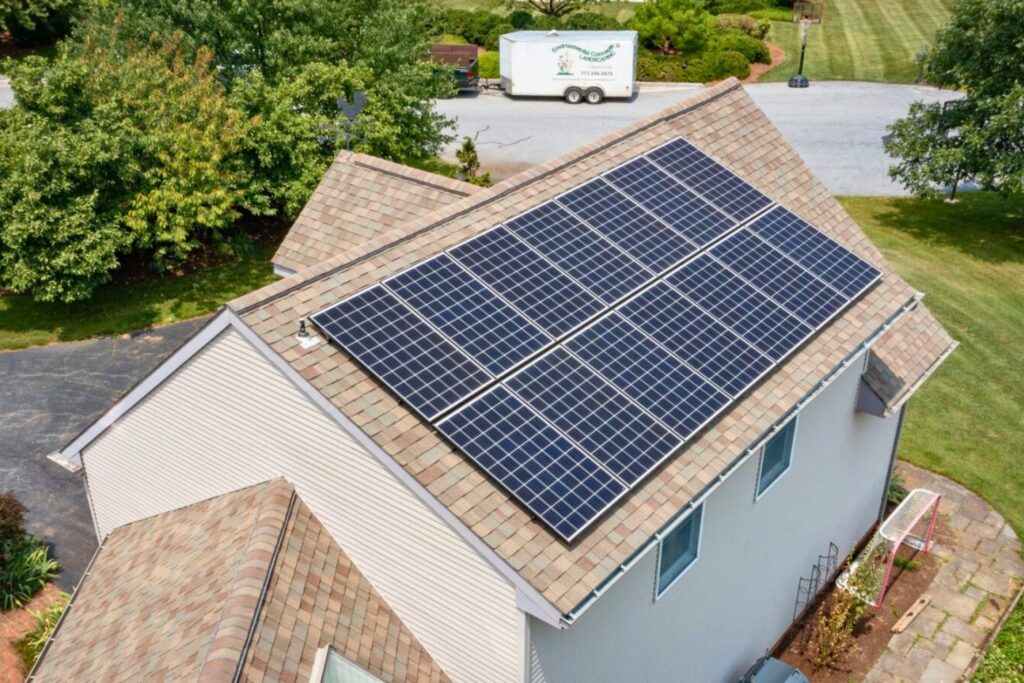
The passive house design principles focus on reducing a home’s energy needs through better construction and building science. Once that foundation is in place, additional technologies can further improve efficiency, comfort, and long-term savings.
Solar energy can offset a significant portion of a home’s annual electricity consumption. When paired with an efficient building envelope, solar systems become even more effective because the home requires less energy to operate.
Heat pumps provide highly efficient heating and cooling by moving heat rather than generating it. Combined with proper insulation and airtight construction, they can significantly reduce operating costs.
Many homeowners are choosing all-electric homes that use electricity for heating, cooling, water heating, cooking, and appliances. When paired with solar power, this approach can dramatically reduce dependence on fossil fuels and help stabilize long-term energy costs.
The most successful high-performance homes are planned intentionally from the start. Architects, builders, HVAC designers, and solar professionals can work together to ensure every system complements the others.
If you’re building a new home or upgrading your current one, passive house principles offer benefits that go far beyond lower utility bills.
Homeowners often experience:
At Belmont Solar, we help homeowners understand how insulation, air sealing, ventilation, solar energy, and efficient mechanical systems work together to create high-performance homes.
Request a quote today to learn how passive house principles and solar energy can work together to create a healthier, more comfortable, and more energy-efficient home.

It's a Fusion Reactor in the sky, a safe distance away. No need to invent a new one.


